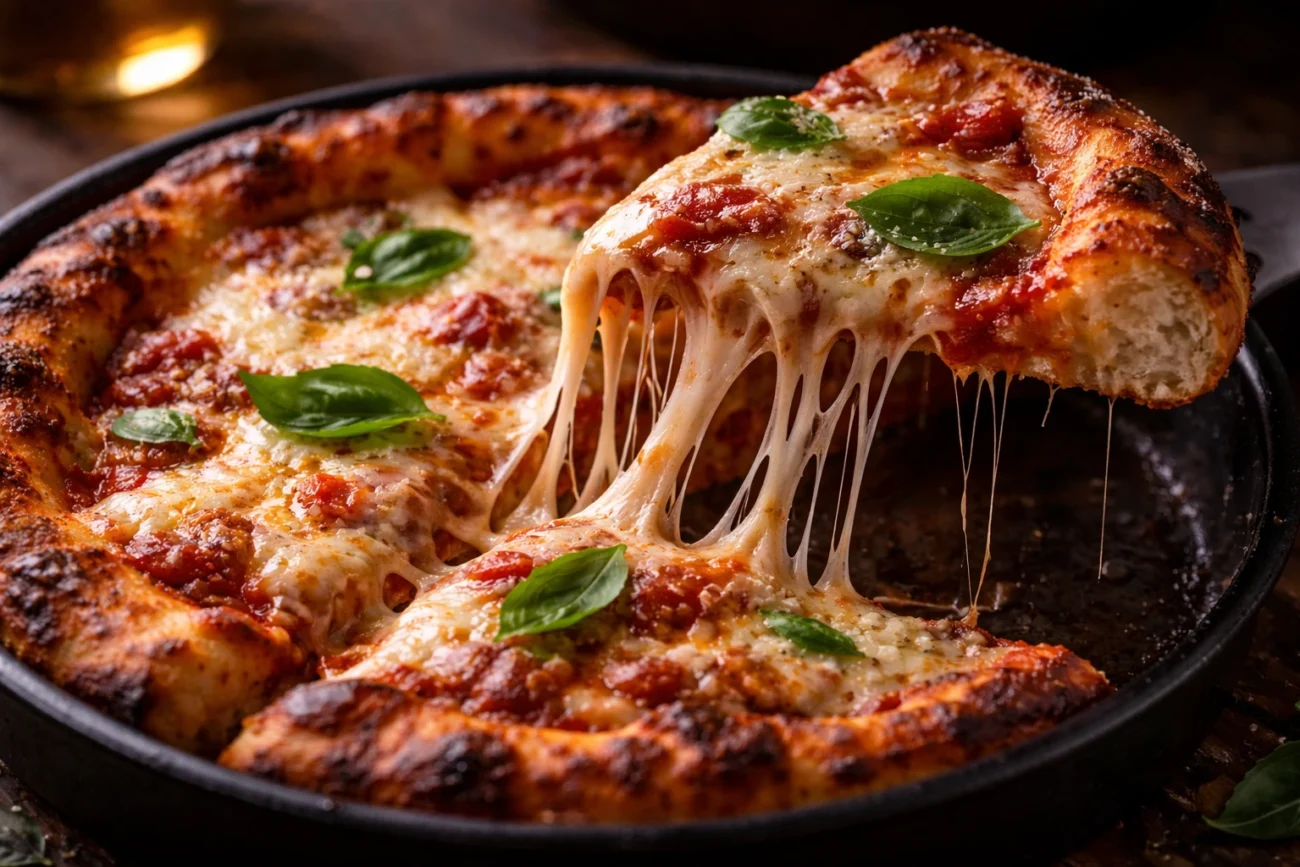
Making pizza without an oven is a practical solution for home cooks who want a reliable, homemade pizza experience using only a skillet or stovetop pan. This method is designed for real-life kitchens where tools and space may be limited, yet the goal is still to achieve crisp crust, melted cheese, and a balanced topping-to-dough ratio.
The stovetop method works especially well for thin to medium crust pizzas that need direct heat and controlled steam to finish properly.
Unlike frozen pizzas or takeout alternatives, homemade stovetop pizza gives you full control over the ingredients, texture, and flavor. Much like comforting hommade lasagna which you can have full control over recipe.
The dough cooks directly against the preheated pan, which creates a crisp base, while a lid traps steam to melt cheese and warm toppings, resulting in a balanced finish that resembles skillet breads found in many cuisines. This recipe is just like our one pan marry me chicken.
Why the Stovetop Pizza Method Works
A skillet or frying pan offers similar benefits to cast iron baking techniques commonly used for breads and flatbreads. The direct heat from the pan cooks the bottom crust quickly, allowing browning and crisping without oil based frying. With a lid, steam circulates to finish the top layer, eliminating the need for oven broiling.
Compared to baking, stovetop cooking uses less energy, reduces heat in the kitchen, and speeds up the total cooking time. Cleanup is simpler because no sheet pans or pizza stones are involved, similar to other stovetop-friendly meals such as skillet potatoes or quesadillas.
This method is accessible even for beginners who have never handled pizza dough before, making it a useful technique for households without ovens or with limited equipment. For more hearty meal ideas, explore our dinner recipes for comfort and easy food options.
Ingredients for Stovetop Pizza
This method uses basic, commonly available ingredients. You can use store-bought dough, homemade dough, or pre-made flatbreads depending on preference and time constraints. Ingredients include:
Ingredients:
- Pizza dough (homemade or store-bought)
- Pizza sauce (tomato-based or alternative)
- Shredded mozzarella cheese
- Olive oil
- Salt
- Optional seasonings (oregano, basil, garlic powder)
- Optional toppings (pepperoni, vegetables, mushrooms, onions, olives, etc.)
The dough provides the structure, sauce adds moisture and acidity, and cheese offers fat and meltability. Toppings should be balanced and sliced thinly so they cook evenly during the short stovetop process.
Preparing the Dough for Best Results
Bring the dough to room temperature before shaping. Warmer dough stretches more easily, which helps prevent tearing and allows for a more even crust. Lightly flour the surface and press the dough outward from the center, keeping it relatively thin so it cooks through without burning on the bottom.
If using vegetables as toppings, slice them thinly and pre-sauté high-moisture items like mushrooms or peppers. This prevents excess moisture from softening the crust and helps maintain crispness during stovetop cooking. Looking for more quick snacks recipes and dessert recipes you can add to pizza nights or casual gatherings?
How to Cook Pizza Without an Oven
Preheat a skillet or nonstick pan over medium heat and brush it lightly with olive oil to promote browning and prevent sticking. Add the shaped dough directly to the hot pan and cook until the bottom begins to brown and set this initial step gives the crust structure and prevents sogginess later.
Flip the dough, then quickly layer on sauce, cheese, and toppings without making them too thick so they heat evenly. Return the pan to medium-low heat, cover it with a lid, and let the trapped steam melt the cheese and warm the toppings while the crust finishes cooking without burning. For another stovetop-forward meal with bold flavors, try our chilli oil noodles a fast, spicy dish that cooks up in minutes.
How to Tell When Stovetop Pizza Is Done
Properly cooked stovetop pizza will have:
- A firm, browned bottom crust
- Fully melted cheese on top
- Warm toppings with no excess moisture pools
- Dough cooked through to the center without raw gumminess
If in doubt, lift an edge with a spatula to check browning. Adjust heat as needed to prevent scorching.
Serving Suggestions
Stovetop pizza works well as a main dish for casual meals. Pair it with simple sides such as salads, roasted vegetables, or soups. It can also be cut into small slices or strips for snacks or shared appetizers. Serve your pizza alongside protein-rich mains like creamy garlic chicken or a creamy garlic chicken pasta for a satisfying dinner spread.
Because topping combinations are flexible, this method welcomes classic pairings such as:
- Margherita (tomato, mozzarella, basil)
- Pepperoni
- Veggie (peppers, onions, mushrooms)
- White pizza (olive oil, cheese, garlic)
Tips for Better Results
A few practical adjustments improve reliability:
- Use a lid to melt cheese evenly
- Keep heat moderate to avoid burning
- Don’t overload toppings
- Slice toppings small for faster warming
- Allow dough to warm before shaping
Letting the dough rest helps prevent shrinking and tearing, a common beginner issue when working with gluten-based doughs.
Storage and Reheating Instructions
Leftover stovetop pizza can be cooled fully, then refrigerated in an airtight container for up to three days. To reheat, return slices to a hot dry skillet for a few minutes to restore crispness. Avoid microwaving, as it softens the crust and affects texture. Leftovers also reheat well, similar to our lemon garlic chicken rice bowl perfect weekday meal prep when you want something quick later. For quick weeknight lunches, readers also enjoy our honey soy salmon bowl a protein-forward option that reheats easily and complements busy schedules.
Why This Method Works for Everyday Cooking
The stovetop method offers simplicity, speed, and flexibility without requiring specialized tools. Each step was chosen to ensure the dough cooks through without burning, toppings heat evenly, and the final result remains satisfying for everyday meals.
Final Thoughts On Making Pizza Without An Oven
Making pizza without an oven proves that great homemade pizza isn’t limited by equipment. With a skillet and a few smart adjustments, you can achieve a crisp bottom, melted cheese, and nicely cooked toppings in under 20 minutes. It’s a flexible method that works for thin crust lovers, weeknight cooks, students, and anyone who prefers a low-effort approach without sacrificing flavor. For a sweet finish or casual dessert alongside pizza slices, try our no baked peanut butter cookie a simple snack that pairs well with game nights or casual meals.
Whether you use fresh dough, flatbreads, tortillas, or pitas, the stovetop technique offers control, customization, and instant satisfaction. Once you master heat management and topping balance, stovetop pizza becomes a reliable go-to for busy lunches, late-night cravings, or days when you simply don’t want to fire up the oven. It’s accessible, fun, and surprisingly close to the traditional experience just faster and more practical.
