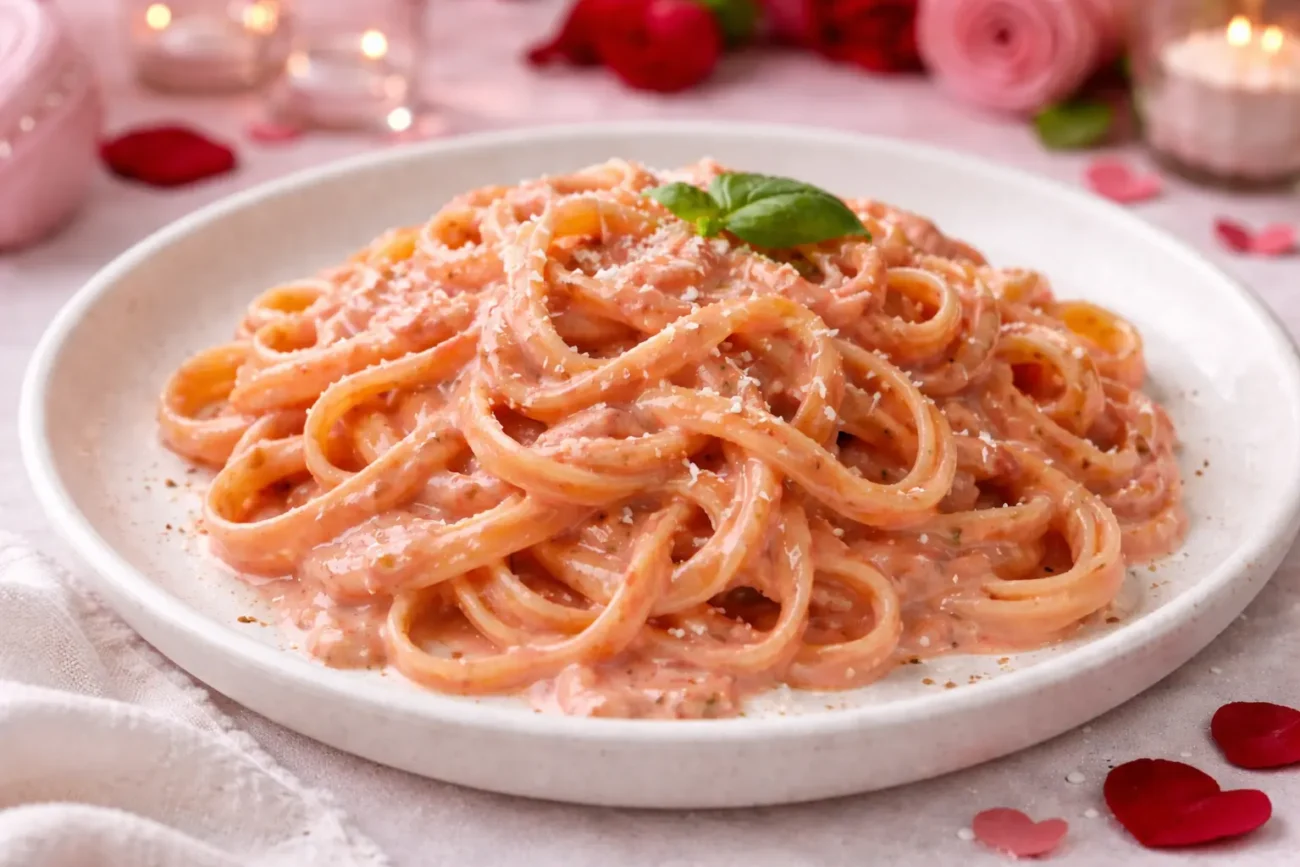
As Valentine’s week begins, pink pasta sauce becomes a natural choice for home cooks who want something special without making cooking complicated. Because the color comes from a simple balance of tomato and cream, the dish feels thoughtful and romantic while still being easy to prepare on a regular stovetop.
At the same time, this recipe solves a common problem. Many Valentine dinners feel either too heavy or too time-consuming. However, pink pasta sauce offers a middle ground. It feels warm and comforting, yet it stays light enough to enjoy without feeling rushed or overwhelmed.
Instead of relying on restaurant-style richness, this version focuses on balance. The tomato brings brightness, the cream softens acidity, and the final sauce coats pasta smoothly. As a result, the dish feels polished while still being practical for home cooking.
Because of its gentle color and familiar flavor, pink pasta sauce works well for quiet dinners, shared meals, or even simple Valentine lunches. It fits naturally into both lunch ideas and dinner plans without feeling heavy. Once you understand the method, it becomes a recipe you can return to well beyond the season. For a heartier plate, this sauce pairs well with loaded jacket potatoes served alongside.
Time Breakdown
| Stage | Time |
|---|---|
| Prep Time | 10 minutes |
| Cook Time | 15 minutes |
| Total Time | 25 minutes |
What Is Pink Sauce Pasta
Pink sauce pasta is a creamy pasta dish made by combining tomato sauce with dairy, usually cream. The blend creates a soft pink color and a flavor that sits between classic red sauce and white sauce.
Unlike heavy cream sauces, pink sauce pasta keeps some acidity from the tomatoes. At the same time, the cream smooths sharp edges and adds body. Because of this balance, the sauce tastes rich without being overwhelming.
This sauce is cooked gently on the stovetop and finished in under 20 minutes. As a result, it suits both planned Valentine meals and last-minute cooking without sacrificing texture or flavor. for a cozy, pan-grilled option on the side, try ricotta grilled cheese with this sauce.
Ingredients
These ingredients are straightforward and easy to find. While the list stays simple, each item plays a clear role in the final pink sauce pasta.
- 2 tbsp butter
- 1 tbsp olive oil
- 1 small onion, finely diced
- 4 cloves garlic, finely chopped
- 1 cup tomato purée or smooth tomato sauce
- 1/2 cup heavy cream
- 1/4 cup milk (optional, for adjusting consistency)
- 1/2 tsp salt, plus more to taste
- 1/4 tsp black pepper
- 1/2 tsp red chili flakes (optional)
- 1/2 tsp dried oregano or Italian seasoning
- 1/4 cup grated parmesan cheese
Optional additions:
- 1/4 tsp sugar, if tomatoes taste acidic
- Fresh basil, finely chopped
Step-by-Step Instructions
- Start with gentle heat
First, place a wide pan over medium heat. Add the butter and olive oil together and let them melt slowly. As the butter begins to foam lightly, swirl the pan so the fats coat the surface evenly. Because the heat is moderate, the butter will melt without browning, which keeps the base smooth and neutral. - Soften the onion properly
Add the diced onion to the pan and stir to coat it in the fat. Cook for about 3 to 4 minutes, stirring occasionally. The onion should soften and turn translucent while releasing a mild, sweet aroma. At this stage, avoid browning, since color can introduce bitterness and affect the final pink sauce pasta. - Add garlic at the right moment
Next, add the chopped garlic and stir continuously for about 30 seconds. You should smell the garlic clearly, but it should not darken. However, if the garlic starts to color too quickly, lower the heat slightly. Burnt garlic can overpower the sauce and make the pink sauce pasta taste sharp. - Cook the tomato base thoroughly
Pour in the tomato purée and stir well to combine it with the onion and garlic. Let the mixture simmer for 5 to 6 minutes, stirring every minute or so. As it cooks, the sauce will thicken slightly and the color will deepen. This step removes raw tomato flavor and creates balance before adding dairy. - Lower heat before adding cream
Reduce the heat to low. Slowly pour in the cream while stirring continuously. Because the temperature is lower, the sauce blends smoothly instead of splitting. As the cream incorporates, the sauce turns a soft pink and becomes noticeably silkier. - Season carefully and adjust texture
Add salt, black pepper, chili flakes, and oregano. Stir gently and let the sauce simmer for 3 to 4 minutes. At this point, check the consistency. If it feels too thick, add a small splash of milk. If it feels thin, allow it to simmer uncovered for another minute so excess moisture reduces. - Finish with cheese for structure
Stir in the grated parmesan cheese and continue stirring until it melts completely. The sauce should now coat the back of a spoon and look glossy, not oily. Taste and adjust seasoning. If the tomatoes taste slightly sharp, add a very small pinch of sugar to soften the acidity. - Serve while warm
Toss the pink sauce pasta with freshly cooked pasta right away so the sauce coats evenly. Alternatively, keep the sauce warm over very low heat, stirring occasionally, until ready to serve. Avoid high heat at this stage, as it can affect texture.
Nutrition Information
Nutrition values are estimates and can vary based on ingredient brands, portion size, and preparation methods. Approximate values per serving:
| Nutrient | Approximate Amount (per serving) |
|---|---|
| Calories | 260 kcal |
| Protein | 6 g |
| Carbohydrates | 10 g |
| Fat | 22 g |
| Saturated Fat | 12 g |
| Sodium | 420 mg |
Recipe Overview
This pink sauce pasta works because each step controls heat and texture. Cooking the tomato first reduces acidity, while adding cream slowly prevents separation.
At the same time, using both butter and olive oil adds depth without heaviness. The parmesan thickens the sauce naturally, which means no flour is needed.
Because the seasoning stays restrained, the sauce remains flexible. As a result, it pairs well with vegetables, pasta shapes, or light protein additions without losing balance.
Recipe At Glance
| Detail | Information |
|---|---|
| Servings | 3 to 4 |
| Skill Level | Easy |
| Flavor Profile | Creamy, mildly tangy |
| Cooking Method | Stovetop |
| Make-Ahead Friendly | Yes, up to 2 days |
Helpful Tips and Variations
- Use heavy cream for smoother pink sauce pasta. Milk alone can thin it too much.
- If the sauce separates, lower the heat and stir gently until it smooths out.
- Add sautéed mushrooms or spinach for texture without overpowering the sauce.
- Avoid boiling after adding dairy, as high heat causes graininess.
- For Valentine plating, use short pasta that holds sauce well, such as penne or rigatoni.
For a complete Valentine dinner, serve this pasta before butter basted steak or alongside marry me chicken.
Storage and Make-Ahead Notes
Store leftover pink sauce pasta in an airtight container in the refrigerator for up to 3 days. Because dairy thickens when chilled, the sauce will firm up slightly.
When reheating, add a splash of milk and warm gently while stirring. Avoid boiling, as this affects texture.
Freezing is not recommended. Cream-based sauces tend to split once thawed, which changes consistency.
For general leftovers storage guidance, see the USDA food safety resource: Leftovers and Food Safety (USDA) .
Final Thoughts
Pink sauce pasta is a reliable recipe when you want something that feels special but remains practical. It uses familiar ingredients, cooks quickly, and relies on balance rather than heavy seasoning or complicated steps. Because the method is straightforward, it works well even if you are making it for the first time.
At the same time, this recipe fits naturally into Valentine’s week without feeling forced. The color feels intentional, the texture stays smooth, and the flavors remain comforting rather than overwhelming. As a result, it suits quiet dinners just as well as shared meals. Finish the meal with something light like chocolate strawberries or red velvet waffles for a soft, festive finish.
Once you understand the technique, pink sauce pasta becomes flexible. You can adjust thickness, seasoning, or additions without losing the core structure. Because of that, it’s a recipe worth keeping, not just for the occasion, but for regular cooking too.
