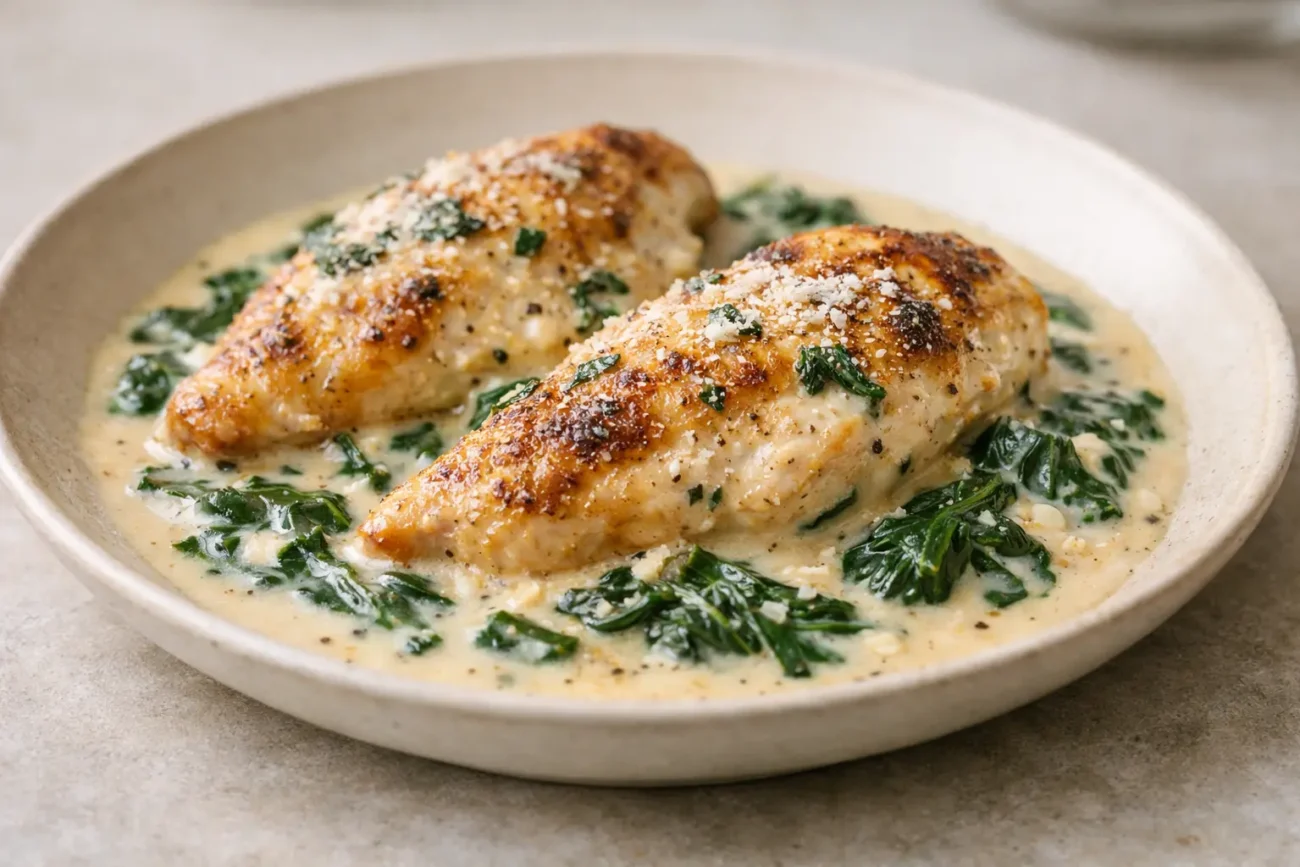
As Valentine’s week approaches, creamy Tuscan chicken is a natural choice for couples who want a comforting dinner that still feels considered. Because it cooks in one pan and uses familiar ingredients, it offers something special without turning the evening into a long kitchen project. For a heartier plate, serve it alongside loaded jacket potatoes for a full dinner feel.
At the same time, this recipe solves a common problem. Many Valentine dinners feel either too heavy or too complicated. However, creamy Tuscan chicken stays balanced. The sauce is rich but not overwhelming, and the chicken remains tender rather than smothered.
Instead of relying on restaurant techniques, this version focuses on control and timing. The cream is added gently, the spinach is wilted at the right moment, and the parmesan thickens the sauce naturally. As a result, the dish feels polished while still being achievable at home.
Because it pairs easily with pasta, mashed potatoes, or crusty bread, creamy Tuscan chicken works for quiet dinners as well as shared meals. Once you understand the method, it becomes a recipe you can repeat beyond Valentine’s week. It fits naturally into our dinner recipes when you want something comforting but still well balanced.
Food Safety Advisory: Always cook chicken to an internal temperature of 165°F (74°C) to ensure it is safe to eat. Refrigerate leftovers within 2 hours of cooking and store them in airtight containers.
If leftovers show unusual odor, texture, or appearance, discard them. For official food safety guidance, refer to this resource from the USDA: USDA Chicken Food Safety Guide .
Time Breakdown
| Stage | Time |
|---|---|
| Prep Time | 10 minutes |
| Cook Time | 25 minutes |
| Total Time | 35 minutes |
What Is Creamy Tuscan Chicken
Creamy Tuscan chicken is a stovetop chicken dish cooked in a light cream sauce with garlic, spinach, and parmesan. The chicken is pan-seared first, then finished gently in the sauce so it stays moist.
Unlike heavier cream dishes, this version balances richness with freshness. The spinach adds softness and color, while parmesan provides salt and structure rather than heaviness. Because of this balance, the sauce coats the chicken instead of drowning it.
The dish is typically cooked in one pan from start to finish. As a result, flavors build naturally, and cleanup stays simple. If you enjoy bold stovetop flavors, garlic chili chicken offers a spicier dinner alternative.
Ingredients
This recipe uses a short list of familiar ingredients, but each one plays a specific role in how the dish turns out. The chicken provides structure, the cream and parmesan create body, and the spinach keeps the sauce from feeling too heavy.
- 2 large boneless chicken breasts
- 1/2 tsp salt, plus more to taste
- 1/4 tsp black pepper
- 1/2 tsp paprika
- 1 tbsp olive oil
- 2 tbsp butter
- 4 cloves garlic, finely chopped
- 1/2 cup chicken broth
- 1/2 cup heavy cream
- 1/4 cup grated parmesan cheese
- 2 cups fresh spinach
- 1/2 tsp dried Italian seasoning
- 1/2 tsp red chili flakes (optional)
Optional but helpful:
- 1/2 tsp lemon juice for balance
- Extra parmesan for serving
Step-by-Step Instructions
1. Prepare the chicken properly
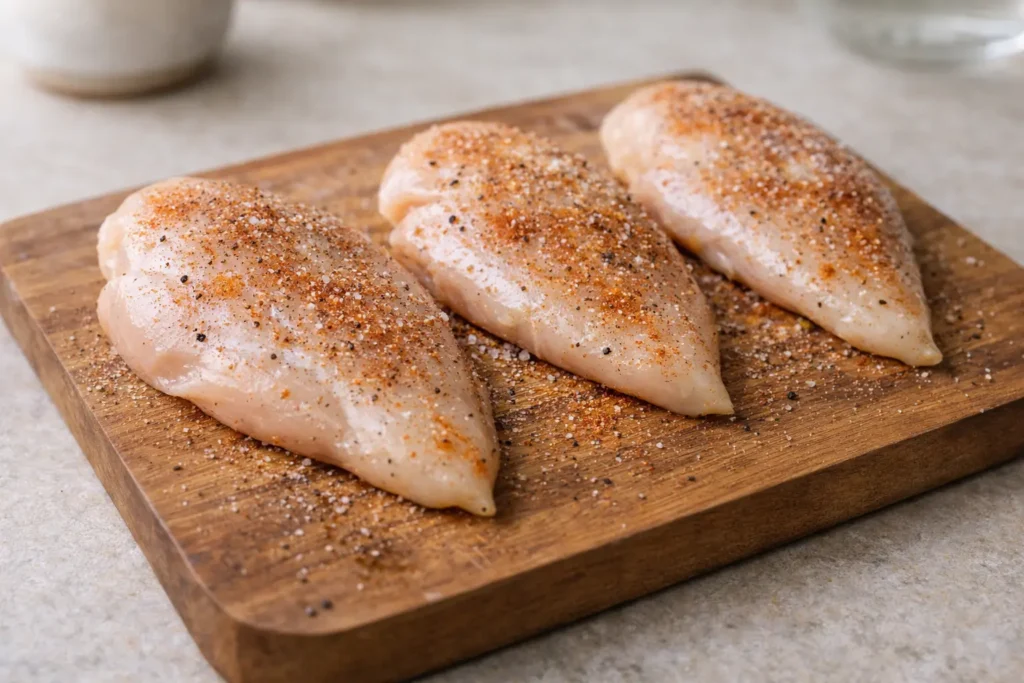
Start by patting the chicken breasts dry with paper towels. This step matters because moisture on the surface prevents proper browning. Once dry, season both sides evenly with salt, black pepper, and paprika. The chicken should look lightly coated, not heavily dusted.
Visual cue: Dry, seasoned chicken with no visible moisture on the surface.
2. Sear the chicken
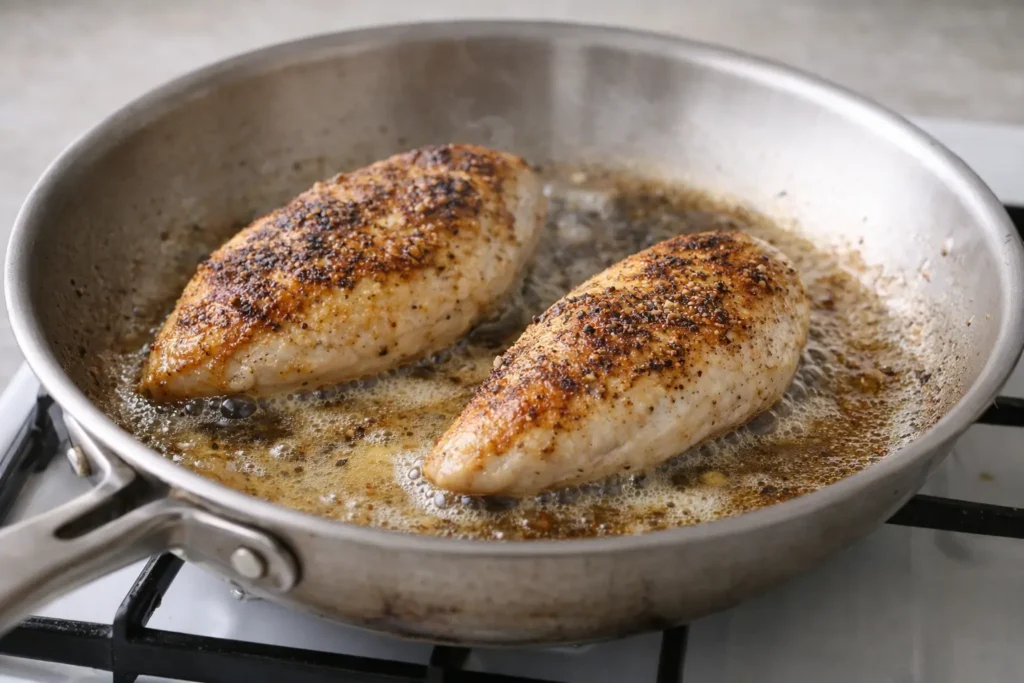
Heat a wide skillet over medium heat, then add the olive oil and butter together. Once the butter melts and begins to foam lightly, place the chicken into the pan. Cook for 4 to 5 minutes on each side until a golden crust forms. At this stage, the chicken does not need to be fully cooked through. Remove it from the pan and set it aside.
3. Cook the garlic gently
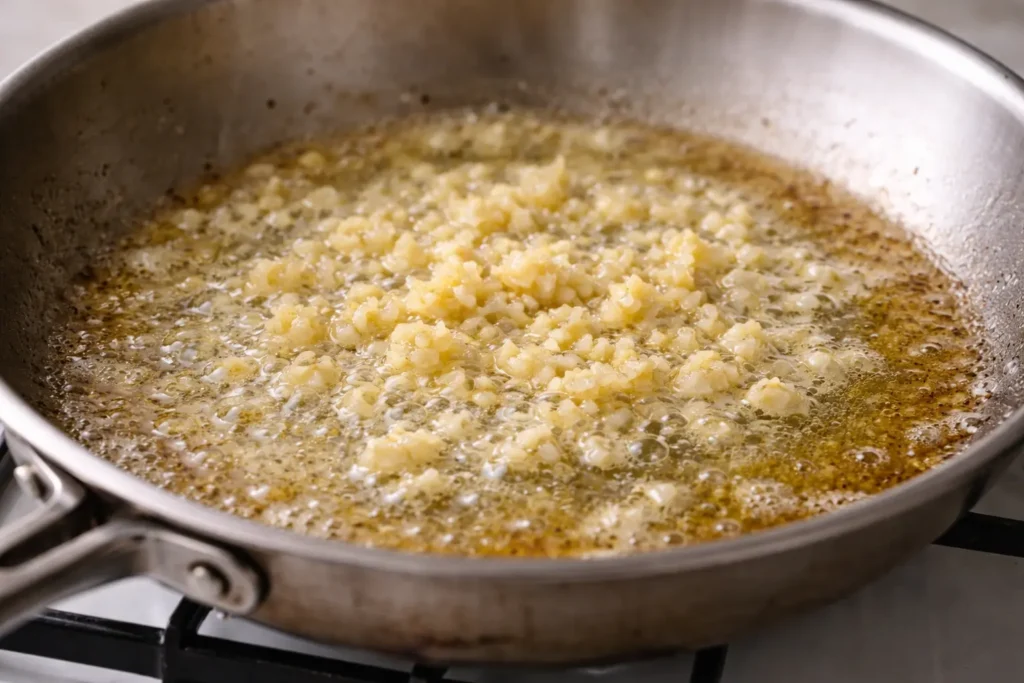
Lower the heat slightly before adding the chopped garlic to the same pan. Stir continuously for about 30 seconds so the garlic cooks evenly in the remaining butter and oil. You should notice a warm, savory aroma almost immediately. The garlic should stay pale and soft, not browned. If it begins to color, reduce the heat right away, since browned garlic can make the sauce taste bitter.
4. Deglaze and build the base
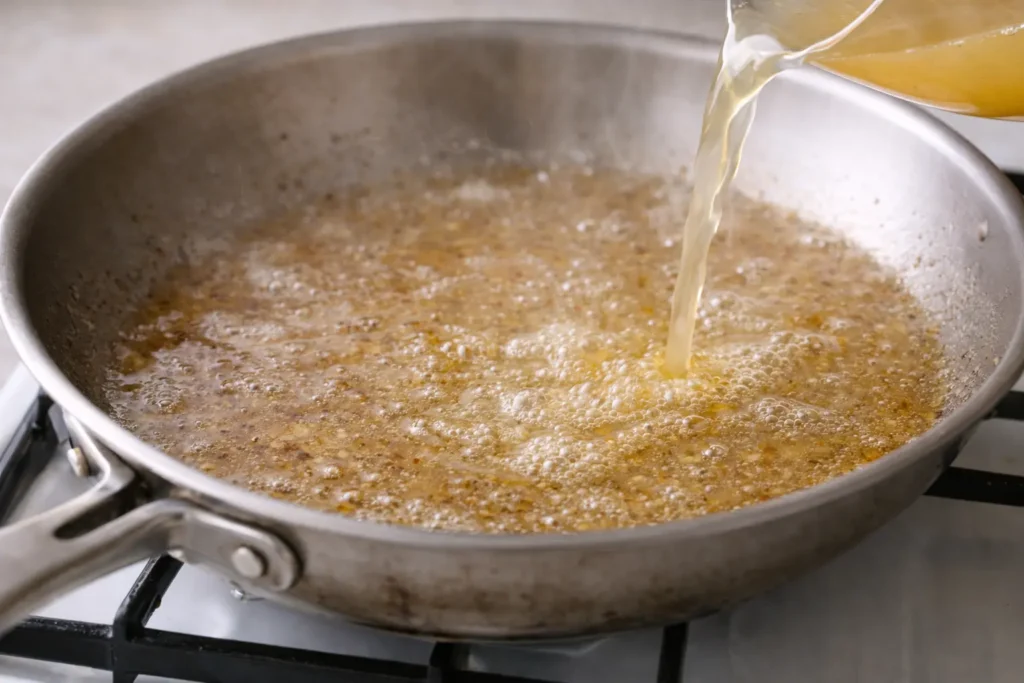
Pour the chicken broth into the pan while it is still warm. As the liquid heats, use a spoon or spatula to gently scrape the bottom of the pan. This loosens the browned bits left from searing the chicken, which add depth to the sauce. Let the broth simmer for about 2 minutes so it reduces slightly and the flavor concentrates without becoming salty.
5. Add cream carefully
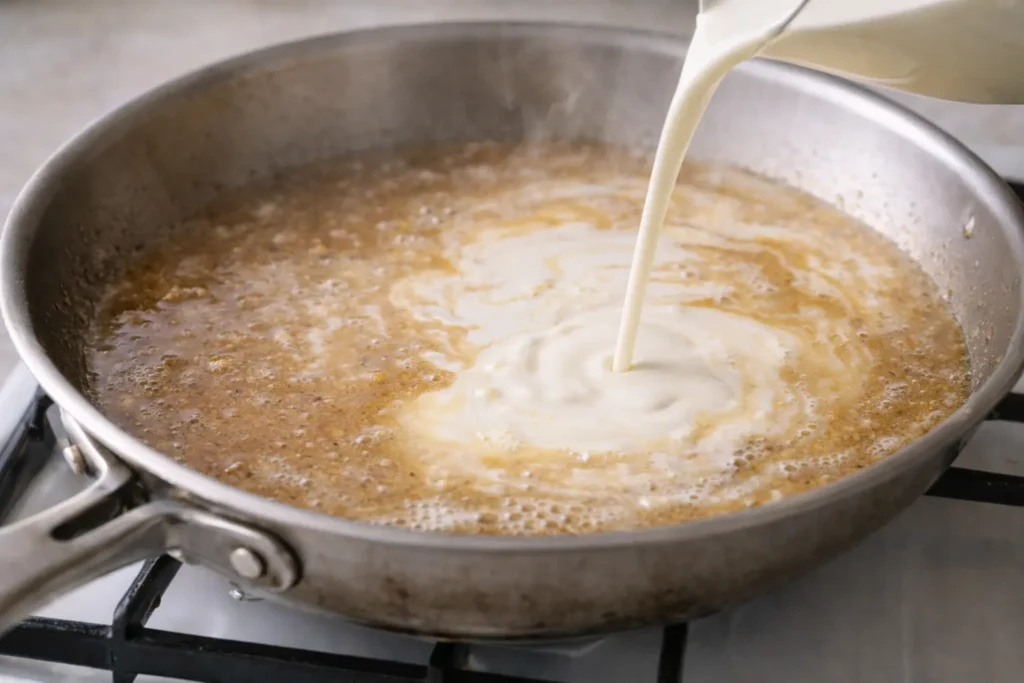
Reduce the heat to low before adding the cream. Slowly pour it into the pan while stirring continuously. As the cream blends with the broth, the sauce should turn smooth and pale. Keep the heat gentle at this stage, because high heat can cause the cream to separate. The sauce should look glossy and even, not thick or curdled. For another creamy, oven-finished option, try baked chicken parmesan on a different night.
6. Thicken with parmesan
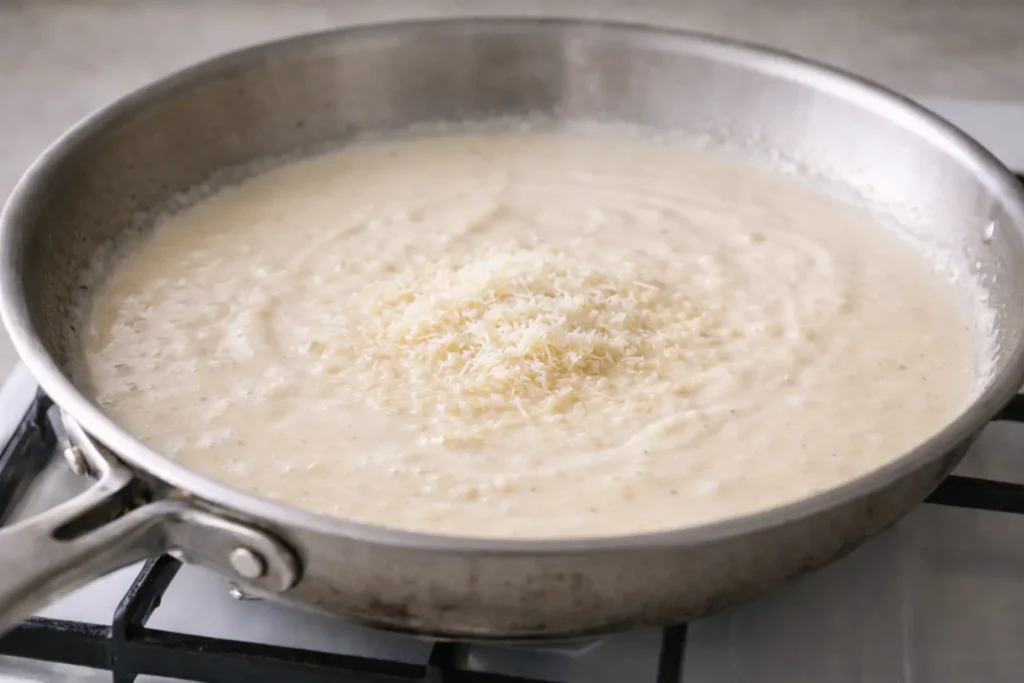
Add the grated parmesan cheese a little at a time, stirring gently until it fully melts into the sauce. As the cheese incorporates, the sauce will thicken naturally without needing flour. Sprinkle in the Italian seasoning and chili flakes if using, then stir just enough to combine. The sauce should lightly coat the back of a spoon at this point.
7. Return the chicken
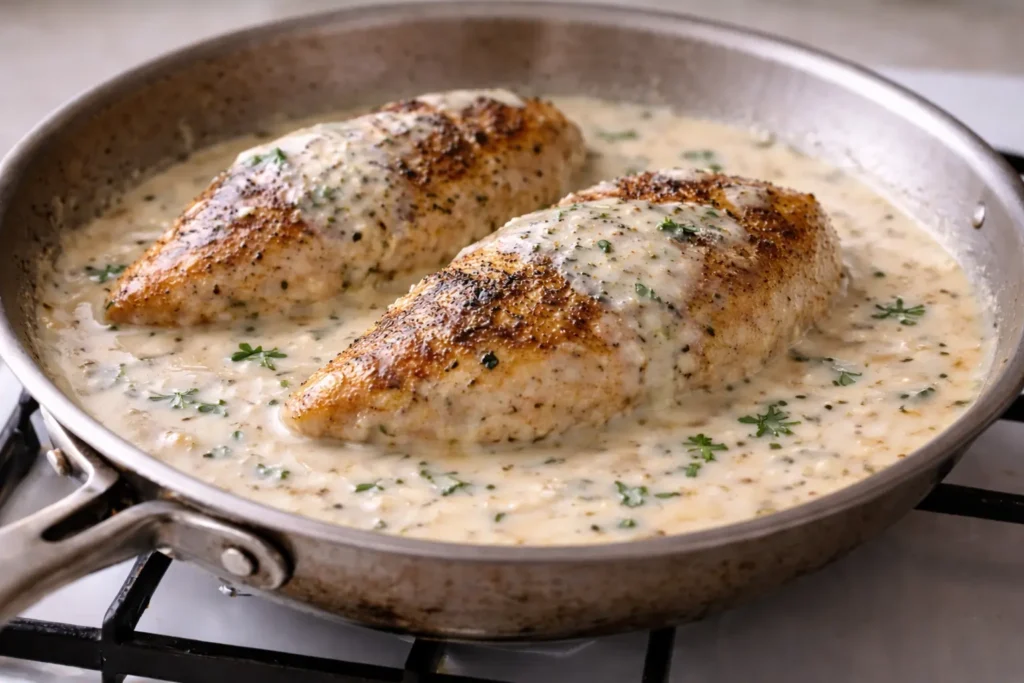
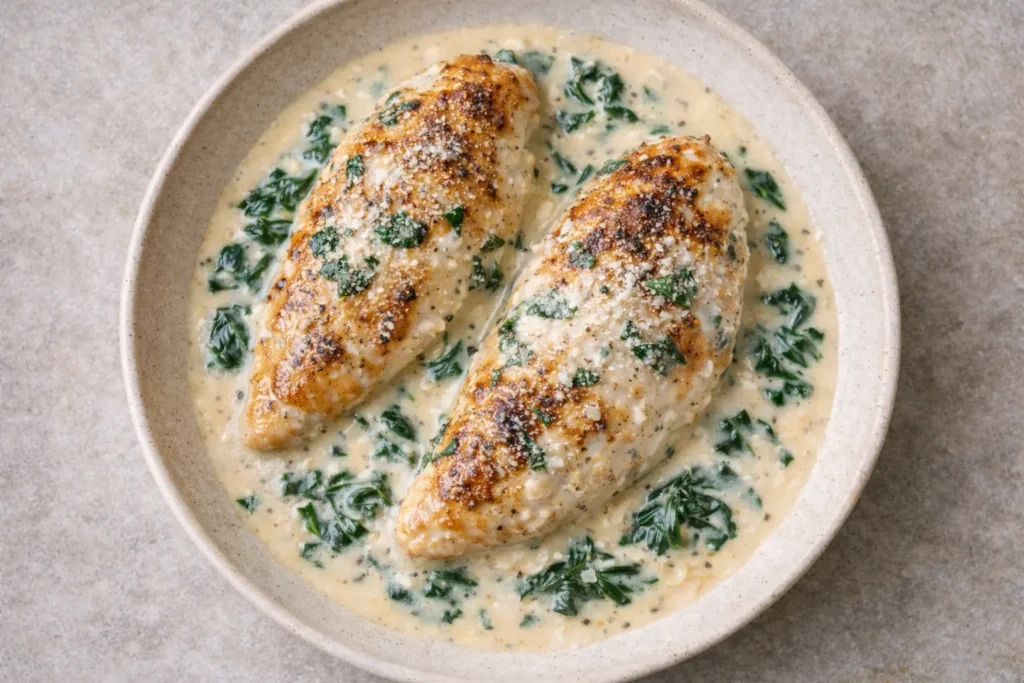
Place the seared chicken back into the pan along with any juices that collected while it rested. Spoon some of the sauce over the chicken so it reheats evenly. Let everything simmer gently for 5 to 7 minutes. During this time, the chicken finishes cooking and absorbs flavor from the sauce while staying tender.
8. Finish with spinach
Add the spinach to the pan and stir gently so it folds into the sauce. The spinach will wilt quickly, usually within 1 to 2 minutes, and turn a deep green. Taste the sauce and adjust salt if needed. If the sauce feels too rich, add a few drops of lemon juice to brighten and balance the flavors without overpowering them.
For the best texture, use freshly grated parmesan instead of pre-shredded cheese. It melts more smoothly and helps the sauce stay creamy rather than grainy.
Nutrition Information
| Nutrient | Approximate Amount (per serving) |
|---|---|
| Calories | 520 kcal |
| Protein | 38 g |
| Carbohydrates | 12 g |
| Fat | 36 g |
| Saturated Fat | 18 g |
| Sodium | 680 mg |
Nutrition Disclaimer: Nutrition information is provided as a general estimate and may vary based on ingredient brands, portion size, substitutions, and preparation methods. This information is intended for guidance only and should not be considered a substitute for professional dietary advice.
Recipe Overview
This recipe works because each step controls heat and texture. Searing the chicken first builds flavor, while finishing it gently in the sauce keeps it juicy. If you prefer simpler seasoning with rich texture, butter thyme steak follows a similar heat-control approach.
At the same time, parmesan thickens the sauce without flour. The spinach is added last so it stays soft and bright rather than dull. Because of this timing, the dish stays balanced and visually appealing.
The sauce remains flexible. It can be spooned over pasta, potatoes, or bread without becoming too heavy.
Recipe At Glance
| Detail | Information |
|---|---|
| Servings | 2 to 3 |
| Skill Level | Easy |
| Flavor Profile | Creamy, savory, lightly garlicky |
| Cooking Method | Stovetop |
Helpful Tips and Variations
- Slice chicken breasts in half lengthwise for faster cooking.
- Keep heat low once cream is added to avoid separation.
- Use freshly grated parmesan for smoother sauce texture.
- Add mushrooms if you want extra body without changing the base.
- If sauce thickens too much, loosen with a splash of broth.
For an easy hands-off dinner, sheet pan sausage keeps prep minimal with reliable results.
Storage and Make-Ahead Notes
Store leftovers in an airtight container in the refrigerator for up to 3 days. Because the sauce contains dairy, it will thicken as it cools.
Reheat gently over low heat with a splash of broth or cream. Avoid boiling, as this can affect texture.
Freezing is not recommended, since cream sauces can separate when thawed.
Final Thoughts
Creamy Tuscan chicken is a dependable recipe that fits Valentine’s cooking without pressure. It feels intentional, cooks in one pan, and stays balanced rather than heavy. Because the steps are controlled and realistic, the dish works just as well for everyday dinners as it does for a quiet evening in. It sits comfortably among other weeknight dinners that focus on balance rather than heaviness.
General Disclaimer: The content published on bitesrecipes.com is provided for general informational purposes only. While we strive to share accurate, tested, and practical recipes, cooking results may vary based on ingredient brands, substitutions, equipment, portion sizes, and individual cooking conditions.
bitesrecipes.com does not guarantee specific outcomes and is not responsible for variations in results. Readers are encouraged to use their own judgment and follow proper food handling and cooking practices.
